Why I Became Enthusiastic About the My Robot, My LearnMate Project
Although I have been teaching for many years, long enough to feel some of the natural fatigue that comes with experience, I still believe that education must evolve alongside society. It should grow with science and technology, but never lose sight of what truly matters: the human, the social, and the emotional dimensions of learning. Perhaps for this reason, I have always tried to bring technology into my lessons, not as an end in itself, but as a pedagogical means to teach better, to awaken curiosity, and to make learning more meaningful for my students.
Programming has always interested me, especially as a Mathematics teacher, but mostly because of its potential to develop computational thinking, logic, creativity, and collaboration, both through plugged tasks (using computers or robots) and unplugged ones.
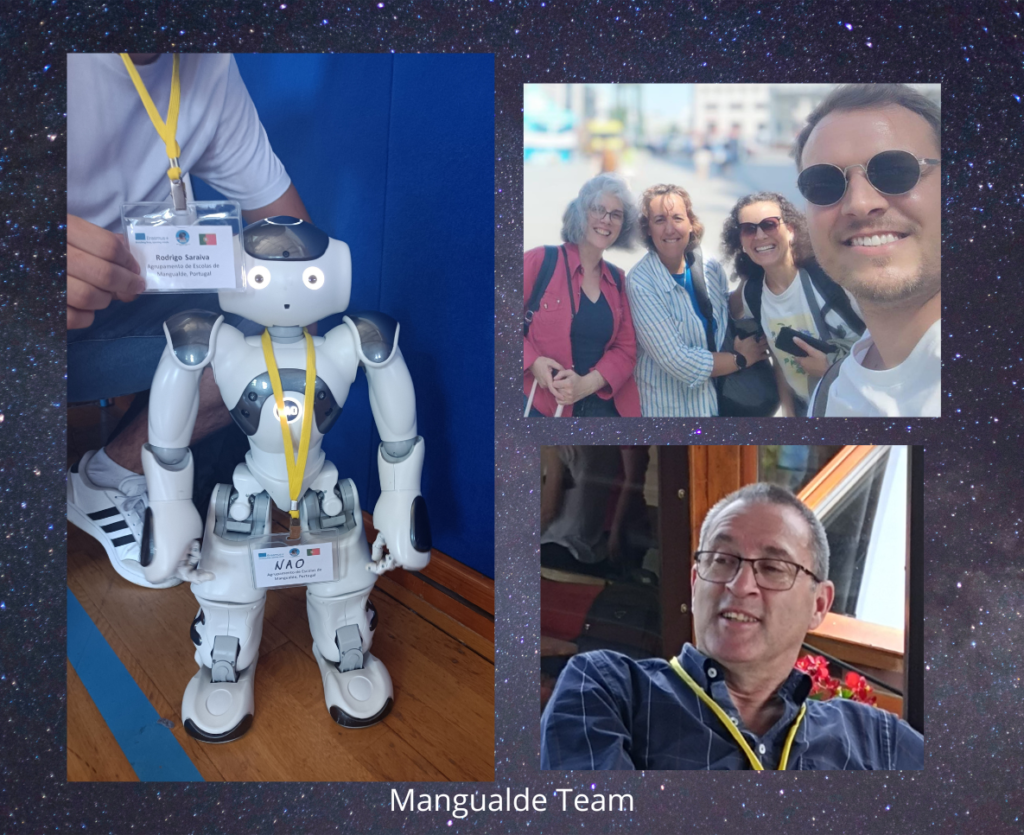
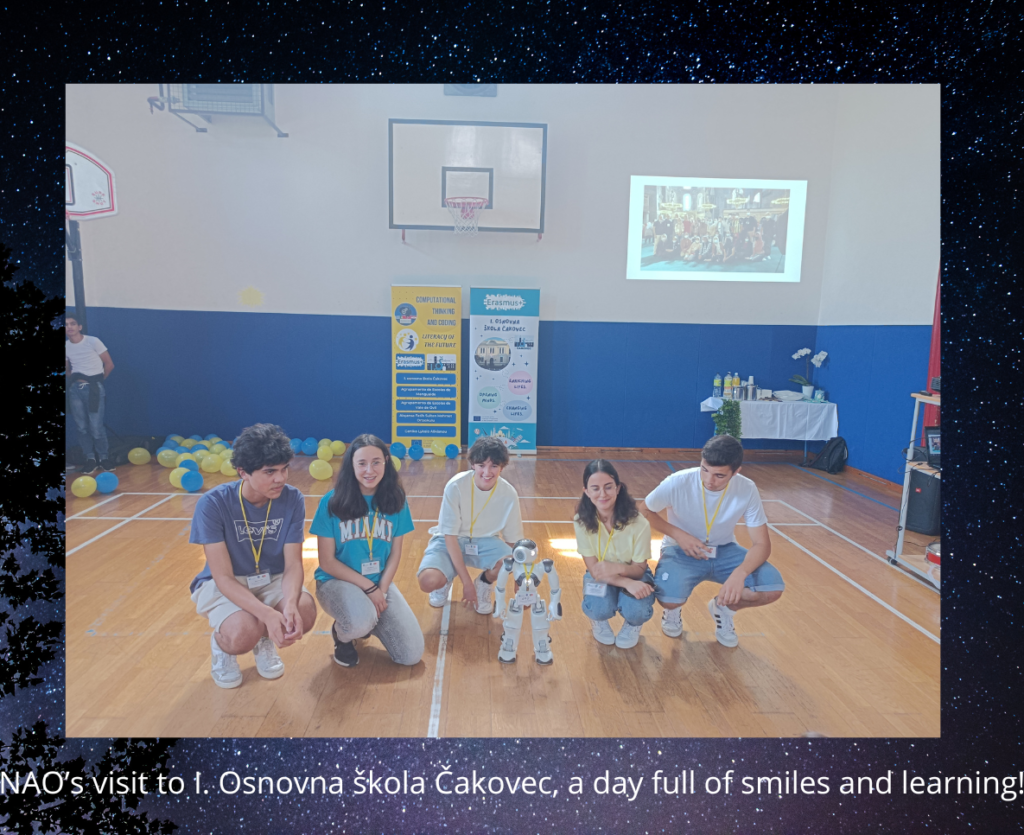
It was in this context that, more than six years ago, I first met the humanoid robot NAO, through the EDUFOR Teacher Training Centre, with which my school is affiliated. At the time, we were taking part in the Erasmus project Computational Thinking and Coding – The Literacy of the Future, coordinated by the Croatian teacher Ivana Ružić, who now leads the My Robot, My LearnMate project. The NAO robot even travelled with our team to Croatia, and I can honestly say that I have been in love with it since then. I have been fascinated by its educational potential and by the questions it raises about the role of technology in learning.
Indeed, NAO has a special charm: it is friendly, expressive, and immediately creates empathy. But soon came the inevitable questions: how can we use NAO pedagogically? Does it really add value to students’ learning? If it remains only a “friendly figure,” then any robot with an appealing design could take its place. However, when integrated with clear educational purpose, NAO can become a powerful tool for teaching, inclusion, and inspiration.
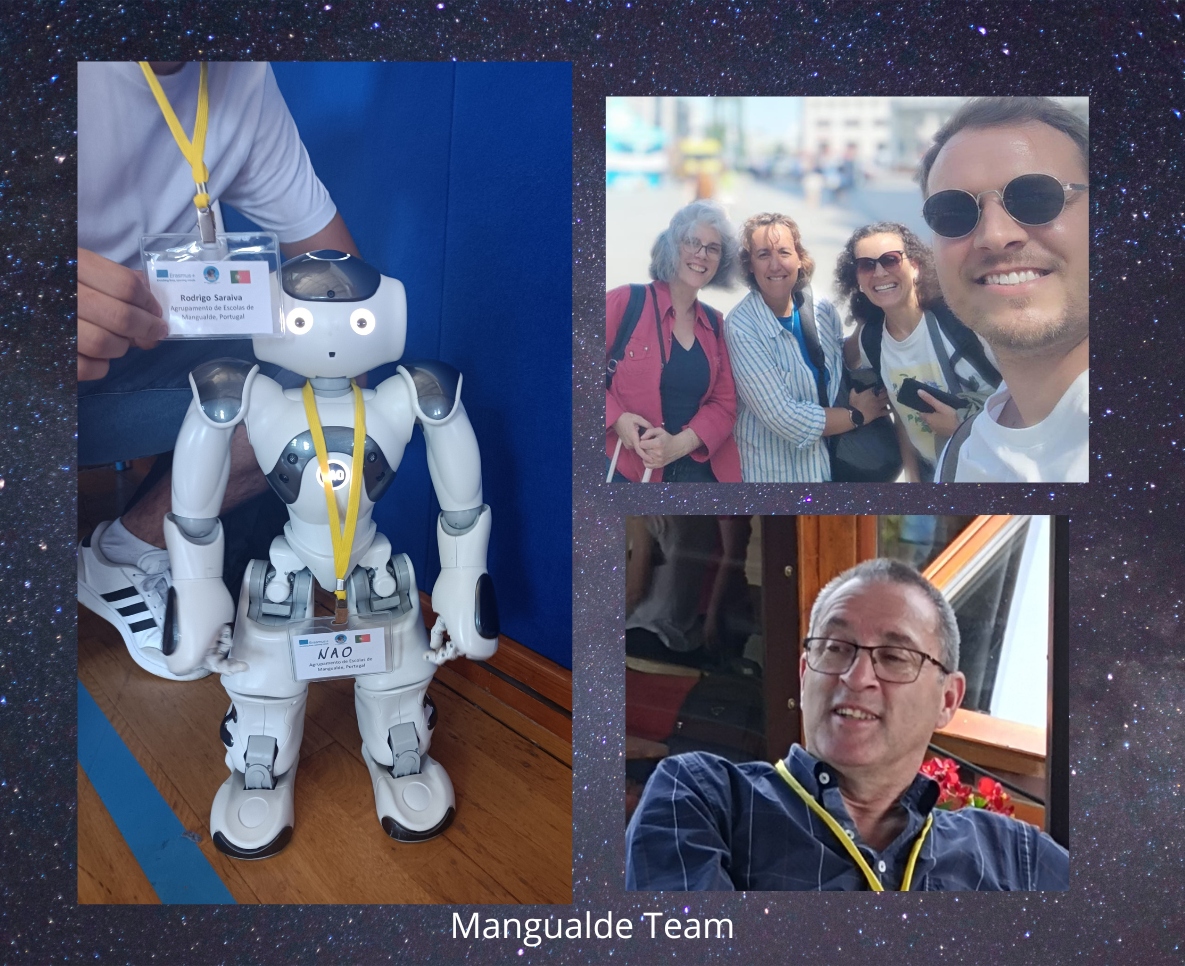
With these reflections in mind, I enthusiastically accepted the invitation to coordinate My Robot, My LearnMatein Mangualde. The project represents an opportunity to study, test, and understand how NAO can be used ethically and educationally, promoting learning, inclusion, and the development of 21st-century skills. In Mangualde, I am fortunate to work with a dedicated team of teachers: Idalina Silva, Electronics teacher, Paula Martinho, Computer Science teacher, and Fábio Ribeiro, coordinator of the Mangualde STEM Academy, together with Renato Castro, Science teacher at our school. We have been exploring how NAO can inspire both teachers and students to see technology as a meaningful tool for learning.
Now, after more than a year of work, I feel truly privileged. I have had the chance to read, observe, and learn from international experiences, and to take part in the creation of a MOOC that goes far beyond theory: one that allows us to learn how to program NAO with simple blocks, to reflect on the objectives of a teaching scenario, and to consider the ethical issues that arise when using such a human-like tool.
The learning so far has been immense, and the next challenge is to help my colleagues take the same journey: to participate in the MOOC, to design meaningful teaching scenarios for their students, and to find fulfilment in this creative process.
This project continues to strengthen my belief that educational innovation must always serve people, helping teachers to grow, students to learn with purpose, and schools to remain places where knowledge and humanity walk side by side.
Author: Cristina Ligeiro, Mathematics teacher and local coordinator of the Erasmus+ project “My Robot, My LearnMate” at Agrupamento de Escolas de Mangualde, Portugal.